
Connected Commerce
Keep the relationship going after purchase.
LIVVIUM connects your physical product to its story, care, registration and new content, and builds the experience behind it—so customers keep coming back long after checkout. Any product can be discussed.
Four things customers can do with a connected product.
Tap the product, learn about it, register it as theirs, and keep finding something new after purchase. Together, this is what LIVVIUM calls Dynamic Post Purchase™ (DPP™).
How do I find out more?
Customers tap or scan the product itself to open its own page.
Runs on ExposedLayersOS, built by LIVVIUM.
Where it’s being used
One system, very different products.
The same connected layer works across a garment, an artwork, an environment or packaging. What changes is what the customer unlocks.
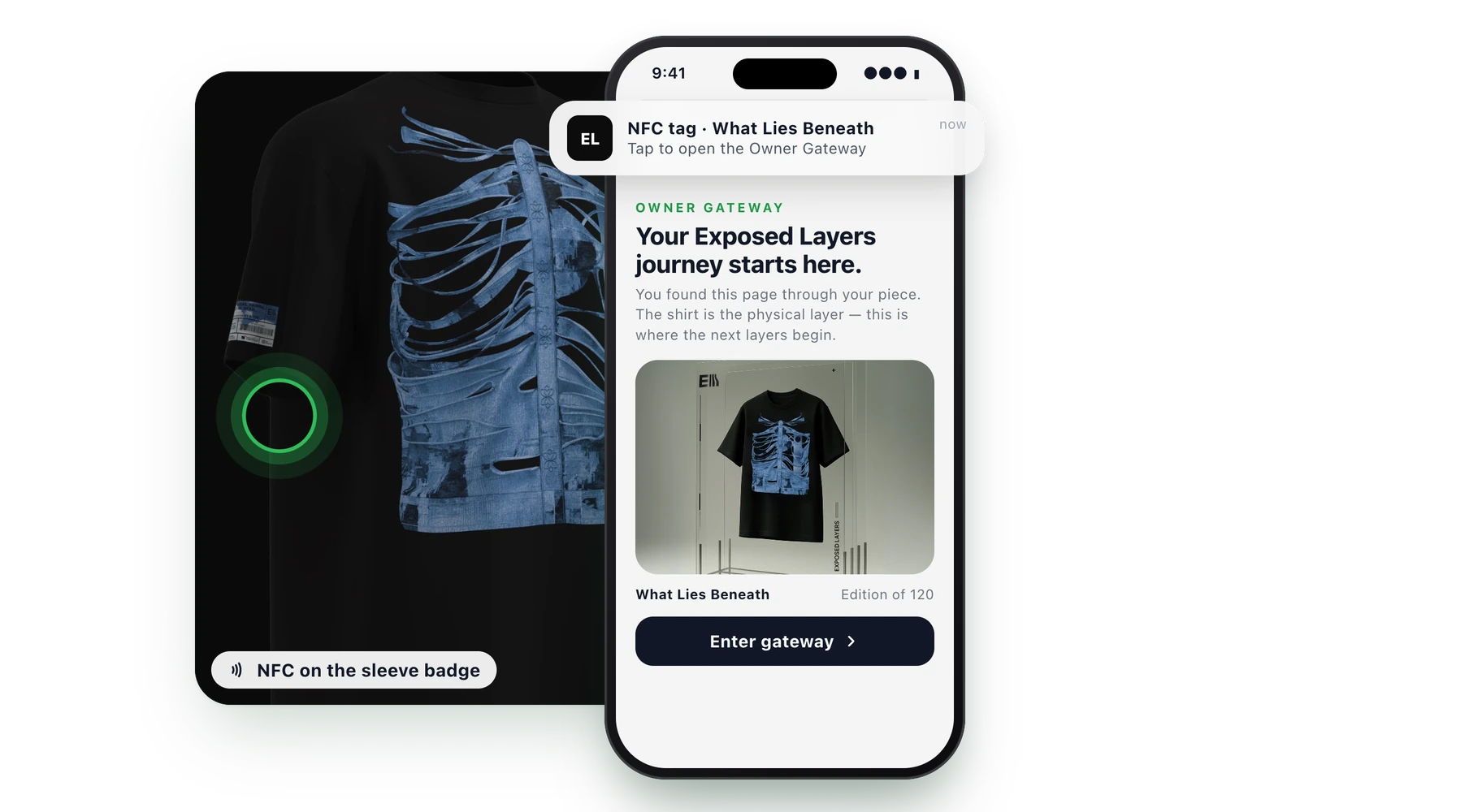
 GarmentCustomers tap or scan the garment to see its story, register it as theirs and unlock new layers over time.See the actual projectWhat Lies Beneath (opens in a new tab)
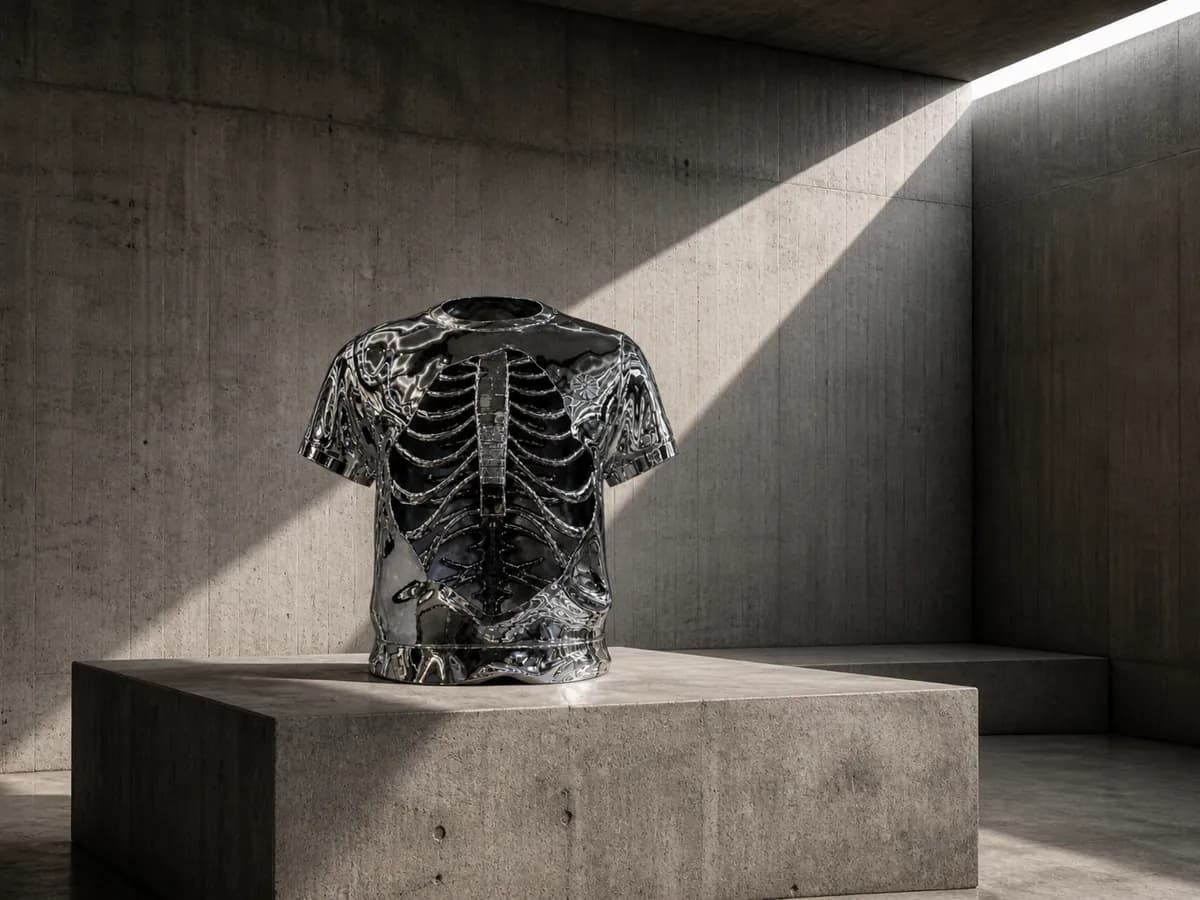 ArtworkAn NFC tag inside the piece opens its record—edition, provenance and where it has been shown.See the actual projectRIBCAGE 001 (opens in a new tab)
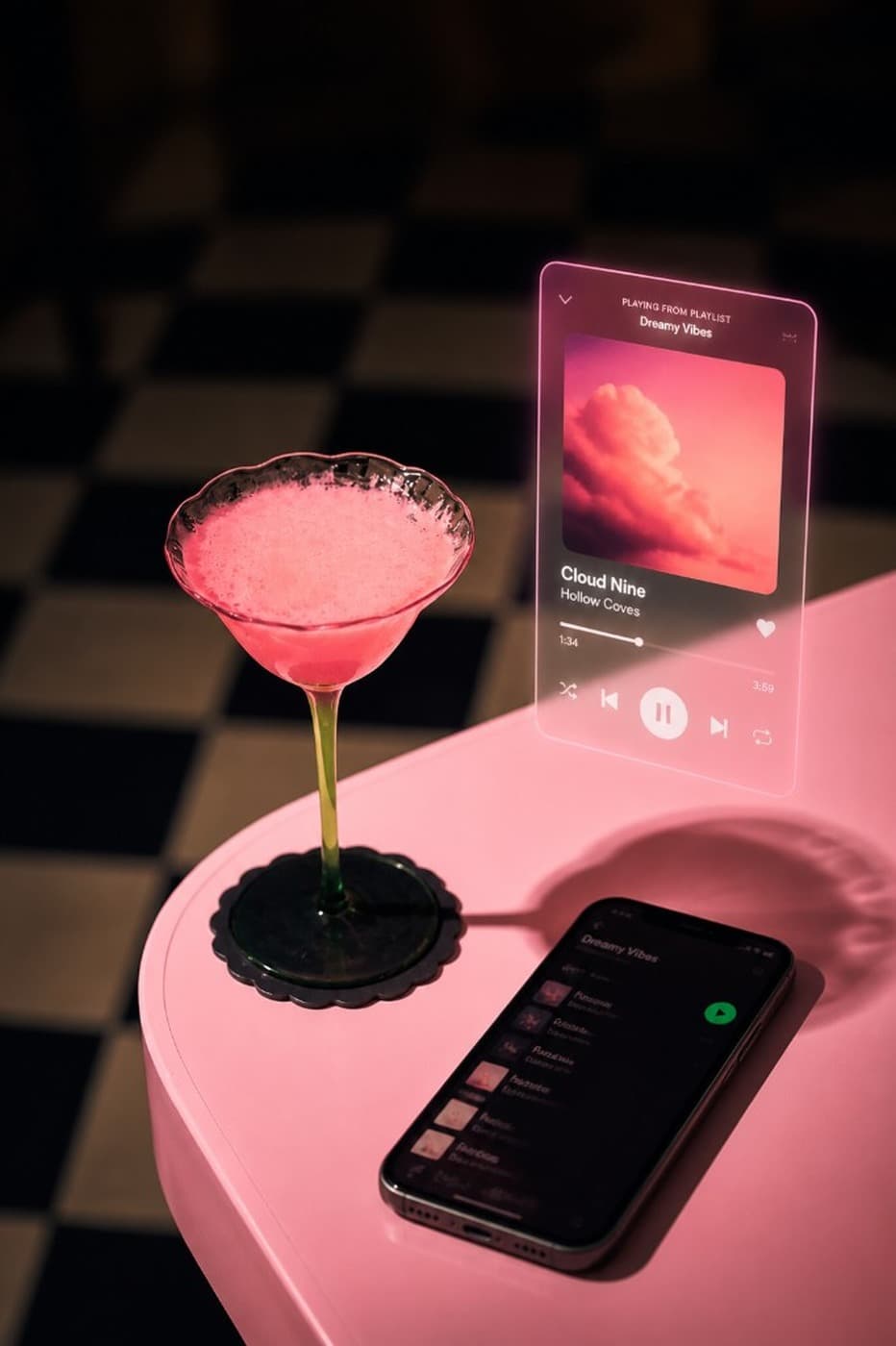 EnvironmentA piece in the space, such as a coaster on the table, opens a playlist, a story or an offer for that place.See the solutionEnvironment solution (opens in a new tab)
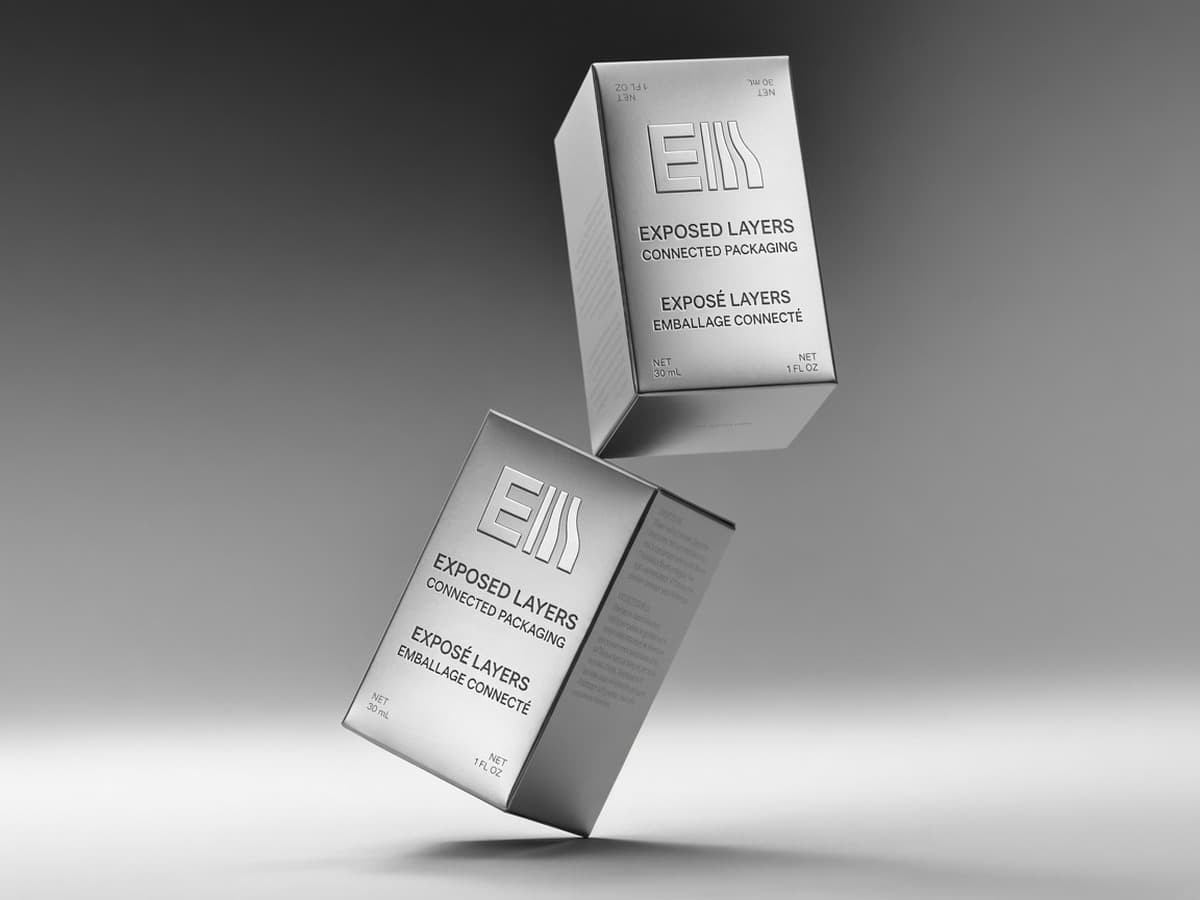 PackagingCustomers scan the pack with their phone camera to unlock an AR filter or new content.See the solutionPackaging solution (opens in a new tab)
How a project starts
From one product to a connected customer journey, in three steps.
We plan and build the whole connected experience with you, so you don’t need your own platform or developers. Any product can be discussed—start with the one you have in mind.
Why work with LIVVIUM
We’ve already built it, on a real product.
LIVVIUM designed and built Exposed Layers LIVE and ExposedLayersOS, and used them on a real garment. So we start from working tools, not a blank page.
Along the same journey.
Connected commerce is what happens after purchase. The earlier steps are online and in store.
Common questions.
AA physical product with a digital layer the customer can open, usually by tapping an NFC tag or scanning a QR code. It can show product information, care, the product story, registration details and new content over time.
ANo. LIVVIUM plans and builds the connected experience from start to finish—what customers see when they tap the product, the tag itself, and how it links to your ecommerce and stores—using platforms we have already built.
AAny product can be discussed. LIVVIUM has already applied it to a garment and an artwork. Tell us what you have in mind and we’ll look at what would be useful for your customers.
AYes. Most projects start with one product or edition, see how customers use it, then extend to more products.
ANo. The connected layer sits alongside your ecommerce, stores and customer communication, and can link back to them.
AFor LIVVIUM, DPP™ stands for Dynamic Post Purchase™. The experience doesn’t stop at checkout: the product keeps giving customers something useful—care, its story, registration and new content—and what they see can change over time. It is not the same as a Digital Product Passport, which is a record of what a product is made of and where it came from. LIVVIUM also explores DPP™ in its research series, What Happens After Checkout?
AYes. LIVVIUM designed and built Exposed Layers LIVE and ExposedLayersOS, and used them with CULT ALARA on a real garment, What Lies Beneath. Read the Exposed Layers case study.
AYes. Alongside a connected product, LIVVIUM can create Snapchat AR and filters for a launch, a campaign, packaging or the product itself. Customers open them on their phone, try them, and share them.
AYes. LIVVIUM can combine its own platforms with specialist partners and your existing systems.